
Bow River Runoff Fishing: Advanced Tactics for High Water Success


Runoff on the Bow River has a way of humbling anglers.
One week, you’re reading seams, spotting risers, and feeling like you have the river dialed in. The next, the Bow is up, off-colour, pushy, and dragging half the mountains downstream with it. For a lot of anglers, that is the cue to hang up the waders and wait for clearer water.
But for experienced anglers, runoff is not a write-off.
It is a different game. A heavier, dirtier, more technical game. And when you understand how trout reposition, where clean edges form, and how to adjust your presentation, runoff can produce some of the most exciting Bow River fly fishing of the season.
This is not beginner water. High flows demand respect, better decision-making, and a willingness to fish differently. But if you are ready to level up, here is how to approach fishing the Bow River during runoff with more confidence.
First, Understand What Runoff Does to the Bow
Runoff changes everything: water level, clarity, current speed, temperature, food supply, fish location, and access.
As the snowpack melts in the mountains, the Bow rises and often turns cloudy or stained. Heavy rain events can make this happen even faster. In these conditions, trout are not usually sitting in the same places they were during lower spring flows. They are looking for three things: softer current, safety, and food they can find without burning unnecessary energy.
That means the middle of the river is often less important than the edges. The pretty dry fly seam you loved in May may be replaced by flooded grass, undercut banks, back eddies, soft inside corners, and slow seams tucked tight to structure.
During runoff, trout are not always hard to find because they are inactive. They are hard to find because anglers keep fishing where the fish used to be.
Watch the Hydrograph when Bow River runoff fishing, Not Just the Colour
Advanced runoff fishing starts before you ever make a cast.
A river that is high and rising can be tough. Fish often become unsettled when flows are climbing quickly, especially if the water is also getting dirtier. But when the river peaks, stabilizes, or begins to drop, the bite window can change in a hurry.
That is your green light to pay attention.
A dropping Bow River with two to three feet of visibility can fish better than a clearer river that is rising fast. Stability matters. Trout need time to settle into new holding water, and once they do, they can feed aggressively.
Before heading out, check flows, look at recent trends, and think like a trout. Is the river rising hard? Did it bump overnight? Has it been stable for 24 hours? Is it starting to drop? These clues help determine whether you should focus on grinding deep nymph rigs, pounding banks with streamers, or saving the trip for better conditions.
Fish the Bank Like You Mean It
During runoff, “fish tight to the bank” does not mean somewhere near the bank. It means tight.
High water pushes trout into softer margins where they can escape the main current and intercept food. Browns especially love the flooded edge. If the water is up into grass, willows, root wads, or cutbanks, those areas can become prime holding water.
The key is precision. In dirty water, trout have a smaller visual window. A streamer that lands three feet too far off the bank may never get seen. A nymph rig that drifts outside the soft seam may pass through empty water.
Look for:
Inside bends with softer speed
Flooded grass lines
Back eddies beside fast current
Colour changes where cleaner water meets stain
Foam lines tight to shore
Bank structure like roots, rocks, logs, and riprap
Small buckets immediately below obstructions
The best runoff water often looks unimpressive from a distance. Slow, shallow-looking edges can hold fish when the main river looks unfishable.

Streamers: Big Profile, Short Window, No Lazy Retrieves
Runoff is streamer season for anglers who are willing to work.
Dirty water gives larger trout confidence, but it also reduces visibility. Your fly needs to move water, show a clear profile, and stay in the strike zone long enough to be noticed.
This is where darker streamers, articulated patterns, leeches, sculpin-style flies, and Bow River buggers earn their place. Black, olive, brown, and darker two-tone patterns can silhouette well in stained water. But do not think colour alone solves the puzzle. Profile and placement matter more.
Fish streamers with intention:
Cast tight to the bank. Let the fly land inches from structure when it is safe to do so.
Give it time to sink. A rushed retrieve often pulls the fly out of the zone too quickly.
Use short, aggressive strips. Make the fly look alive, but not impossible to catch.
Change angles. Sometimes a downstream strip works better than a cross-current swing.
Pause near structure. Many big eats happen when the fly stalls or changes speed.
A sink tip can be a huge advantage, especially from a boat. From shore, choose your setup carefully. Too much sink can make you snag constantly in soft-edge water. Too little, and your fly rides over the fish. Adjust based on depth, speed, and how much room you have to work.
The biggest mistake? Casting once to a prime bank and moving on.
In runoff, fish may need a second look. If a bank has everything — depth, cover, soft speed, and food delivery — give it multiple casts from slightly different angles before writing it off.
Nymphing High Water: Heavy, Simple, and Controlled
Nymphing during runoff is not about delicate presentations. It is about controlled depth, clean drift, and keeping your flies in the small zones where trout are actually holding.
This is not the time for overly complicated rigs. A stonefly nymph, worm, leech, caddis pupa, or attractor-style nymph can all have a place, depending on clarity and bug activity. In high water, bigger food is often more efficient for trout to find.
The rig should match the water. If you are constantly ticking bottom in the wrong places, adjust. If you are never touching anything, get deeper. If your flies are dragging sideways through the seam, change your angle.
Advanced nymphing during runoff is about micro-adjustments:
Shorten your cast to improve control.
Use enough weight to reach the lane, not just the bottom.
Fish softer seams beside heavy current.
Target walking-speed water when possible.
Reset depth often as the bank changes.
Keep your leader simple enough to cast in wind and tight quarters.
Long hero casts usually hurt more than they help. During runoff, short, accurate drifts close to the bank often outfish long casts into the middle.
Follow the Food: Worms, Leeches, Stones, and Caddis
Runoff puts a lot of food in motion. Rising water pulls worms from the banks, dislodges leeches, moves stonefly nymphs, and concentrates insects near the edges. Trout understand this.
That is why worm and leech patterns are not “junk flies” during runoff. They are often exactly what the river is serving.
Stoneflies are also a major part of the Bow River conversation as water warms and high flows push bugs toward the bank. Late June and early July can bring excellent stonefly opportunities when conditions line up. Before the dry fly chaos really starts, nymphing stonefly patterns tight to the edges can be extremely productive.
Caddis can also come into play as the river stabilizes. Even when the surface looks too rough for classic dry fly fishing, trout may still be feeding near banks, foam lines, and soft seams where caddis activity gathers.
The advanced move is not just choosing the right fly. It is matching the food source to the water type. Worms and leeches can shine in dirty, rising, or recently flooded edges. Stonefly nymphs become deadly when bugs are migrating. Caddis patterns matter more when clarity improves and fish begin feeding with more confidence near the surface.
Do Not Ignore Cleaner Water
During runoff, clarity is rarely uniform.
Tributaries, side channels, springs, storm inputs, and river structure can all create subtle differences in colour and visibility. Sometimes the best fishing is not in “clear” water, but in slightly cleaner water beside dirtier water.
That colour edge can act like a feeding lane. Trout can sit in softer or darker water and ambush food moving along the transition.
Look for places where:
A side channel re-enters the main flow
A slow inside seam meets faster current
A creek or drainage creates a colour change
The bank creates a soft cushion beside a heavy push
Foam collects along a defined edge
If you can find two feet of visibility, soft speed, and a food conveyor belt, you are in the game.
Boat vs. Walk-and-Wade During Runoff
Runoff can make floating productive, but it also raises the safety stakes. Heavy flows, debris, cold water, and limited visibility around hazards are no joke.
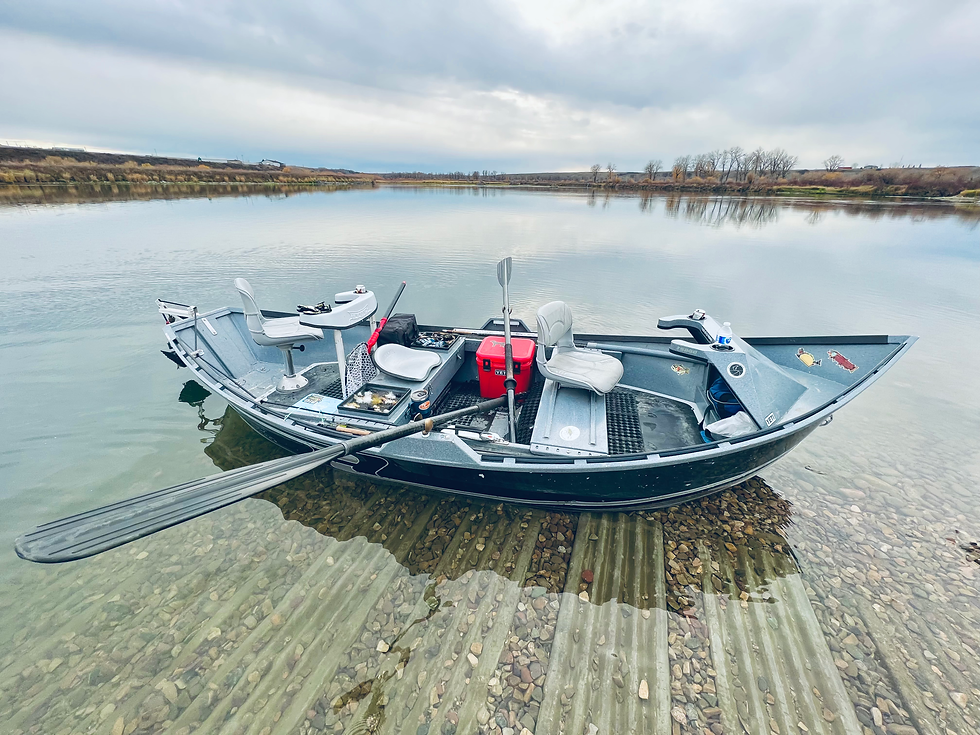
From a boat, anglers can cover prime banks efficiently and hit soft edges that may be impossible to reach on foot. This is one reason guided Bow River floats can be so effective during high water. A good rower can control speed, position the boat, and give anglers repeated shots at the right water.
For walk-and-wade anglers, the strategy changes. You do not need to cover miles. You need to find safe access to productive edge water and fish it thoroughly.
Do not wade aggressively during runoff. In many cases, the fish are already on your side of the river. Step into the water only when necessary, and never trade safety for a slightly better casting angle. The Bow is powerful at normal flows. During runoff, it deserves even more respect.
Advanced Presentation: Slow Down in Fast Conditions
Runoff makes anglers rush. The river feels loud, heavy, and chaotic, so people cast faster, retrieve faster, and move faster.
Do the opposite.
Slow your process down. Watch the water longer. Pick smaller targets. Make fewer, better casts. Let your streamer sink before stripping. Let your nymph rig finish the drift. Rework the same bucket from three angles. Pause your fly beside structure.
In high water, trout are conserving energy. They may be willing to eat, but they are not always willing to chase something moving unnaturally through heavy current. Your job is to put the fly where the fish can eat it easily.
That means speed control is everything.
Runoff Safety and Fish Care
Runoff fishing can be rewarding, but safety and fish care come first.
Check current regulations before you go, including any emergency closures, time-of-day restrictions, or waterbody-specific rules. The Bow River is a regulated fishery, and conditions can change throughout the season.
On the water, use common sense:
Avoid dangerous wading.Watch for floating debris.
Be careful on muddy banks.Wear a wading belt and proper footwear.
Avoid fishing when visibility, flows, or weather make conditions unsafe.
Keep fish wet and handle them quickly.
Use appropriate tippet so fish can be landed efficiently.
Do not target stressed fish in warm water conditions.
Runoff is high-energy water, and trout are dealing with heavy current. Land fish quickly, keep them in the water, and release them with care.
Final Thoughts: Runoff Rewards the Angler Who Adapts
Fishing the Bow River during runoff is not about forcing normal tactics into abnormal conditions. It is about adapting.
The fish move. The food moves. The holding water changes. The windows get smaller, but sometimes the rewards get bigger.
Focus on the banks. Watch the flows. Fish the soft water with purpose. Use flies that trout can find. Adjust your angles. Stay safe. And remember that dirty water does not mean unfishable water.
For advanced anglers, runoff is one of the best tests the Bow River offers. It strips away the easy stuff and rewards the people who can read water, make smart decisions, and stay patient when the river looks intimidating.
And when a big Bow River brown slides out of flooded grass to crush a streamer, you will understand why some anglers quietly look forward to high water.


Comments