
Bow River Water Temperature and Trout Feeding Windows: Timing the Bow River Bite

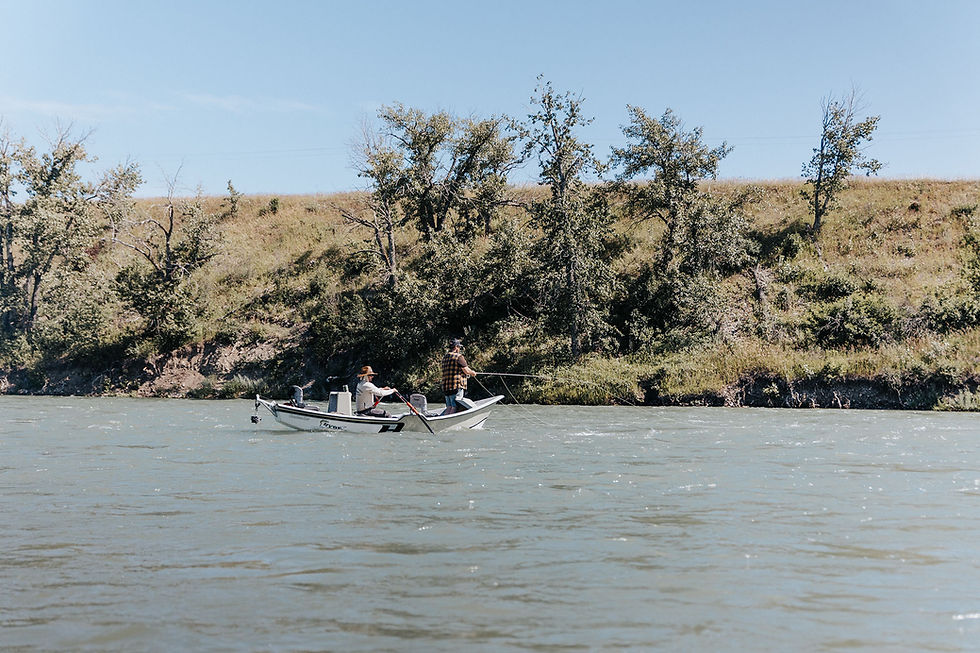
You pull up to the Bow, step out of the truck, and everything looks right.
The river has good colour. Bugs are around. The wind hasn’t started doing whatever Calgary wind has planned for the afternoon. You tie on a fly you’d bet money on. And nothing happens.
Then, two hours later, it feels like somebody flipped a switch. That switch might just be water temperature.
When it comes to Bow River fly fishing, anglers spend a lot of time thinking about flies, hatches, river levels, weather, and where trout are holding. All of those things matter, but water temperature deserves a spot near the top of the list.
Trout are cold-water fish. Their body temperature, metabolism, oxygen needs, digestion, and general activity are closely tied to the water around them. Rainbow trout generally prefer water within roughly 7°C to 18°C, while research has placed optimum growth temperatures for rainbows around 10°C to 15°C.
That doesn’t mean every trout suddenly starts eating at 10°C and clocks out at 18°C. If only the Bow were that cooperative.
What temperature does give you is another piece of the puzzle, and sometimes a very important one!
Why Bow River Water Temperature and Trout Feeding Windows Matter
Trout don't regulate their body temperature the way we do. As the temperature of the river changes, so does their metabolism.
When the water is extremely cold, trout generally need less food and can be reluctant to move very far to get it. As water warms into a more comfortable range, their metabolism increases and feeding opportunities can become more frequent.
But warmer isn't always better. Cold water can hold more dissolved oxygen than warm water. As river temperatures climb, the amount of oxygen the water can hold decreases. At some point, the equation changes.
Instead of warmer water meaning more active trout, the heat becomes a source of physiological stress. Fish may seek cooler, more oxygenated areas and recovering from being hooked can become more difficult.
That's why learning to read water temperature isn't only about catching more trout.
It's also about knowing when not to catch them.
A Practical Bow River Temperature Guide
There isn't one universal temperature chart that perfectly predicts Bow River trout behaviour.
Rainbows and browns differ, individual fish differ, and current speed, weather, oxygen levels, food availability, and recent temperature trends all affect what's happening.
Still, these ranges can give anglers a useful starting point.
Below 4°C: Slow Down
Welcome to winter fishing in Calgary.
In very cold water, trout metabolism is slow, and fish generally aren't looking to burn unnecessary energy chasing food. That doesn't mean they stop eating.
It means the feeding window can be narrower and the presentation usually needs to become more deliberate.
Think deeper water, slower seams, softer edges, and areas where trout don't need to expend much energy to hold their position. Your nymph drifting six inches outside the feeding lane might as well be in Saskatchewan.
During these conditions, the warmest few hours of the afternoon can sometimes be your best opportunity.
4°C to 7°C: Things Are Starting to Happen
As the river begins warming, trout activity can become noticeably more consistent.
This is the range where paying attention to the direction of the temperature becomes especially useful.
A river warming from 3°C to 6°C can fish very differently from a river cooling from 8°C to 6°C.
Same temperature. Different trend.
On colder spring days, a little afternoon sunshine can be enough to increase insect activity and get trout moving. This is when checking the thermometer every hour or two can tell you more than taking one reading when you arrive.
7°C to 13°C: Prime Trout Territory
Now we're getting into some very comfortable trout water.
Rainbow trout feeding habitat is associated with preferred water temperatures from roughly 7°C to 18°C, and the 10°C to 15°C neighbourhood is particularly favourable biologically.
For anglers, this often means longer feeding periods and more opportunities throughout the day.
You may find trout willing to move farther for food, occupy faster water, and respond to a wider variety of presentations.
This is also where insect activity can make temperature-driven feeding windows a lot more obvious.
If the river warms a couple of degrees and suddenly bugs start moving, don't be surprised if the trout follow.
13°C to 18°C: Active Fish, Plenty of Opportunity
This can produce some excellent Bow River fly fishing.
Trout metabolism is elevated, aquatic insects are active, and fish can be aggressively feeding when conditions line up.
But as you move toward the upper end of the range, particularly on hot summer days, it's worth watching the thermometer closely.
A morning reading doesn't tell you what conditions will look like at 3:00 p.m.
On a hot July or August day, that difference matters.
18°C to 20°C: Start Paying Close Attention
Once water temperatures start pushing toward 20°C, catching trout shouldn't be the only thing on your mind.
Warmer water contains less dissolved oxygen, while a trout's metabolic demands are elevated.
That combination reduces the margin for error when handling fish.
If temperatures are climbing toward this range, consider fishing earlier, limiting your fishing window, minimizing fight and handling times, or calling it a day.
There will always be another morning on the Bow.
20°C and Above: Give the Trout a Break
Once you're seeing water temperatures around or above 20°C, it's time to seriously consider putting the trout rods away.
This isn't just an arbitrary number.
Alberta's framework for time-of-day angling restrictions uses water temperatures exceeding 20°C for three or more consecutive days, combined with low-flow conditions on the Bow River at Carseland, among the thresholds used to determine when restrictions should be introduced.
When activated, those restrictions prohibit angling from 2:00 p.m. until midnight in specified waters.
Restrictions aren't automatically in effect every time your thermometer reads 20°C, so always check current Alberta regulations and advisories.
But you also don't need a regulation to tell you when conditions aren't good for the fish.
Sometimes the best decision an angler makes all day is packing up early.
When Are the Best Trout Feeding Windows?
Here's where this gets interesting.
Your ideal fishing time can completely flip depending on the season.
Winter: Look to the Afternoon
During winter, early morning might be the worst time to expect an active feeding window.
The river has spent all night cooling.
Give it a little time.
Late morning through mid-afternoon can bring slightly warmer water and increased insect activity. Even a small temperature increase can be meaningful when the river is hovering only a few degrees above freezing.
This is a good time to slow down, concentrate on likely holding water, and be patient.
Spring: Follow the Warming Trend
Spring fly fishing in Calgary can give you four seasons before lunch.
When conditions are cool, late morning and afternoon warming can trigger activity. A sunny stretch that moves water temperature upward may help get insects — and trout — moving.
Watch for a trend rather than obsessing over a specific number.
If you've been fishing seemingly dead water for two hours and suddenly notice insects appearing, take another temperature reading.
The river might be telling you something.
Summer: Become a Morning Person
July and August can reverse the equation.
Instead of waiting for the Bow to warm up, you're trying to beat the heat.
Early mornings can offer cooler, better-oxygenated water and actively feeding trout before temperatures climb later in the day.
This is when having a stream thermometer clipped to your pack is especially useful.
Take a reading when you start. Take another later.
If the temperature is climbing quickly, adjust your plans accordingly.
An alarm clock isn't everyone's favourite piece of fly-fishing equipment, but during a Calgary heat wave, it might be one of the most useful.
Fall: The Window Starts Moving Again
As nights get colder and daytime temperatures moderate, feeding windows can shift later.
Those painfully early summer starts aren't always necessary anymore.
Depending on overnight temperatures, sunshine, insect activity, and the stretch of river you're fishing, mid-morning through afternoon can become productive again.
Fall is also a great reminder that water temperature is only one variable.
Brown trout spawn in Alberta during the fall, generally from October through December as water temperatures drop below roughly 8°C to 10°C.
That makes recognizing spawning fish and avoiding redds another important part of responsible fall fishing.
Temperature Isn't the Whole Story
Here's the danger with temperature charts: anglers love turning guidelines into rules.
“It's 12 degrees. Fishing should be amazing.”
Maybe.
Or maybe the river jumped overnight. Maybe the bugs aren't moving yet. Maybe the fish have been pressured. Maybe you're fishing the wrong depth. Maybe the feeding lane is three feet to your left.
Water temperature is information, not a guarantee.
Instead, look at the whole picture:
· What direction is the temperature moving?
· What insects are active?
· Is the river rising or dropping?
· Where are the trout holding?
· Has the weather changed?
· Are fish actively rising or are you assuming they should be?
This is where experience on the Bow really starts to pay off.
The best anglers aren't necessarily carrying some secret fly nobody else has.
They're constantly observing.
Carry a Thermometer
For something that can have such a big influence on trout behaviour, a stream thermometer might be one of the cheapest useful pieces of fly-fishing equipment you can own.
And use it properly.
Don't just take one reading when you arrive and forget about it.
Check again as conditions change.
If you're fishing during the middle of summer, knowing the river was 15°C at 7:00 a.m. isn't very helpful when it's now mid-afternoon.
Temperature is moving.
Your fishing strategy should move with it.
Better Timing Means Better Bow River Fly Fishing
Understanding water temperature won't eliminate slow days on the Bow River.
Nothing will.
That's part of fly fishing.
But learning how Bow River water temperature and trout feeding windows influence trout behaviour can help explain why a stretch suddenly switches on, why yesterday's productive afternoon bite disappeared today, why summer mornings can outperform afternoons, and why winter anglers sometimes benefit from sleeping in.
More importantly, it helps us make better decisions for the fish.
The Bow is an incredible trout river running through the middle of a major city. That makes it accessible, but it also means these fish see plenty of anglers.
Knowing when to fish is valuable.
Knowing when not to fish might be even more important.
So next time you're heading out for a day of fly fishing in Calgary, bring the usual collection of boxes, leaders, indicators, dry flies, streamers, snacks, and the fly somebody on Instagram swore was absolutely crushing them yesterday.
Just make room for a thermometer too.
The trout might be telling you more than your fly box ever will.


Comments